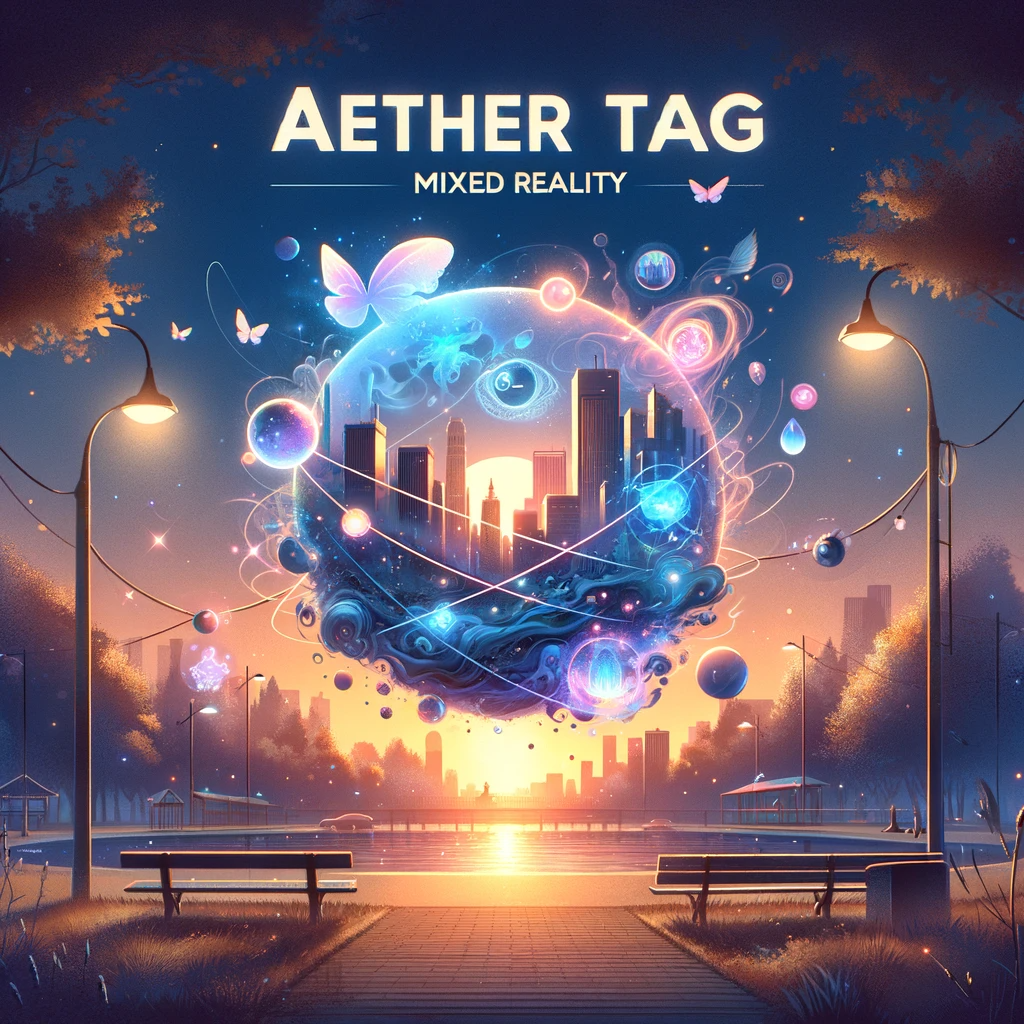
I'm Sam, the tech artist of the VR/AR, mixed reality game Aether Tag. With a background in games and graphics programming, I brought a unique blend of technical expertise and artistic creativity to the project
Aethertag is a VR/AR first-person shooter with a twist. Using pass through technology, enemies materialise in the player's real-world surroundings. The game employs an elemental magic system (fire, water, and grass) where players must strategically choose their attacks to defeat foes. Aethertag's mystical ambiance, reflected in its art style, centres on non-violence; vanquished enemies transform into graceful butterflies, adding a touch of tranquillity to the immersive experience
Given rapid advancement in AR and VR technology, camera pass through in VR headsets will soon become the standard. Therefore, the need for combining video games with augmented reality technology will soon become industry standard. Developing a game for the Meta Quest 3, harnessing the power of camera pass through, creates a perfect challenge and opportunity to showcase transformative capabilities augmented reality provides to VR games, and gives new meaning to the term immersive gaming.
User Journey

As a video game and a mixed reality program, Aether Tag’s user experience was incredibly important to us, keeping the player engaged through every moment of the immersive journey was our foremost priority."
The moment the user runs the game, they should be prompted to scan their environment using their headsets, in the same way they would normally for calibration
A Title/Menu screen appears in front of the player, allowing them to start the game, change settings, and wands/spells and with further development and updates, skins.
With an intuitive control scheme, players would use their right hand to control their wand, casting spells with the trigger button, while defending themselves with a shield in their left hand, along with moving to dodge incoming projectiles.

Settling on 3 elements, much like a game of rock, paper, scissors, player would need to chose the correct wand element to cast its respective spell at an opposing typed enemy, of which, on defeat, would shatter into butterflies
Sarah, represents the exact target audience for the game. Sarah's preferences, interests, and expectations became our guiding light throughout the development process
Aether Tag: My impact on the user experience
As tech artist on the project, every graphical element received my attention, ensuring visual excellence, conformity with the games style and seamless integration into the game world. Whilst I played a part in every asset, my core focus was on a mix of materials and UI implementation. Due to the recent release of the technology, the complete absence of ready made tools and documentation for material development and mixed reality development as a whole, the process was challenging, however with each team member focussing on their strengths, we successfully created a prototype of our game in mixed reality
Maintaining a close collaboration with our UI/UX, I integrated their paper UI designs into the game, providing valuable feedback ensuring the UI was optimised for the VR/AR mixed reality displays, addressing critical considerations such as anchoring windows, menus and HUDs to enhance user experience. I also worked closely with the graphical designer attempting to implement variations of their visions for the aesthetic look of the game, while learning how to render materials using the pass through camera before common modern techniques were developed

Production Timeline
Game Design Process: Generating initial ideas of the concept of the game project as well as project alteration and scoping
Exploration Of Discover Package: The discover package on unity provided us with an example of base uses of mixed reality, giving us an idea of implementations of features for mixed reality and the Quest 3
Basic Functionality; Implementation of controllers and core game functionality, shooting, swapping weapons, models were created for weapons and shield
Project Demo Due
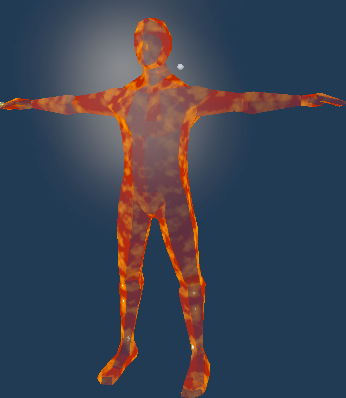
Added Pass through enabled shaders and materials to wands, player character and projectiles; Started on enemy system
Enemy systems were imported from a previous game worked on as they were functionally the same; Particle effects worked on + GUI,
Materials updated, particle effects updated, bug fixes, UI Cut for initial release; enemy deaths fixed (mostly), QA work.
Version 1.0 Due
UI Reimplementation using world space; Changes to materials, animations, particle effects and shaders;
Current Version
Aether Tag - Version 1.0
A Brief Reflection
While the initial goals of our project had to evolve to maintain a manageable scope within the constraints of time, experience level, and the challenges of working with experimental APIs, I am proud to say that the changes we implemented were executed successfully. We managed to create a captivating mixed-reality game that effectively merged VR with AR, demonstrating the immense potential of this combination
Looking forward, armed with a deeper understanding of the systems we utilised, I am confident that further development could lead to the creation of a fully-fledged game, free of bugs and enriched with additional features. Such a game would be one I would be proud to see on Oculus’ platforms, showing the journey of growth and accomplishment we've embarked upon
The most challenging aspect of the development process undoubtedly stemmed from the transition to working within a substantially larger team, which comprised a total of 7 members. However, as we approached the deadline, our team rallied together to overcome these obstacles. While my primary role within the team was that of a Tech Artist, responsible for unifying the diverse artistic assets and establishing a consistent art style, my background in game programming allowed me to contribute as a supplementary gameplay programmer. This dual role provided a fresh perspective on problem-solving and expedited the resolution of certain issues. However, working with the Experimental APIs brought its share of challenges for all programmers, specifically regarding its lacking documentation. This would extended to the development of shaders and materials for the game. While some shaders were provided in the discovery repository, they were basic and did not align with the aesthetic we aimed for. As time became increasingly scarce, I found myself grappling with the intricacies of deciphering and modifying hundreds of lines of code within these shaders, striving to understand their nuances and eventually craft new, whimsically coloured, and animated shaders that were ideal for our project.
In addition to the challenges we encountered, our team faced hardware limitations that significantly impacted our development process. I found myself in a unique position as the sole team member capable of running the software during critical demonstration and public testing times. This responsibility also meant that the pressure of implementing hot fixes fell squarely on my shoulders when the project unexpectedly broke just two hours before its showcase. With the core gameplay programmer unavailable at that crucial moment, I had to persevere and swiftly address the issues, all while a team of onlookers expressed their bewilderment and urgency in resolving the situation
When it comes to workload distribution, our team of 7 members organised into distinct roles: 3 programmers, 2 artists, a UX/Game designer, and 2 'other' roles. Specifically, Joshua Davies shouldered the bulk of gameplay programming in Unity, and I provided assistance wherever needed, closely coordinating with the artists. Our 3D artist, Vincente Didier Edwards, took on the additional role of our presentation specialist, ensuring that our progress presentations were consistently up to date. Meanwhile, our UI artist, Wenqu Tang, initially had an ambitious scope of work but still engaged with the team by contributing small pieces of VFX within the game and enhancing her design contributions, which have now been successfully integrated. While UX/Game designers typically play a pivotal role in substantial projects, Zhou Huiying's contributions were minimal in this case. This was because we collaboratively developed the concept as a team, and our programmers took on UX responsibilities as they became more familiar with the system.